University of North Carolina at Chapel Hill
Where the Crawdads SingThe University of North Carolina at Chapel Hill is named in the novel as a source of advanced textbooks for Kya Clark, making the university an indirect but consequential presence in her education. Rather than bringing Kya into a classroom, it reaches her through a library loan: an institution at a distance supplying the books with which she pursues scientific knowledge on her own.
College and Distance
In a conversation with Kya, Tate Walker says that he will soon leave for college; he had spoken of going to Chapel Hill, though Kya tries not to dwell on the departure. His educational path is therefore associated with a destination beyond the marsh, while Kya remains there. The university itself is not identified as Tate’s college in this exchange, but the reference to Chapel Hill places higher education within the story’s geography of separation and opportunity.
Tate’s absence becomes more than a single farewell. Just before he is due to return home for the Fourth of July, Dr. Blum, who hired him in a protozoology laboratory, invites him to join a birding expedition with renowned ecologists. The offer gives Tate another academic opportunity at the moment Kya is waiting for him, sharpening the contrast between his expanding scientific world and her isolation. The episode does not establish an affiliation between Dr. Blum’s laboratory and the University of North Carolina at Chapel Hill; the university’s direct connection to the plot appears elsewhere, through books.
A Route to Scientific Knowledge
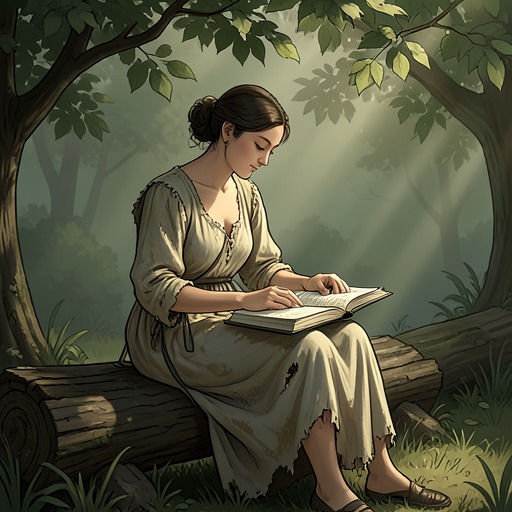
After Tate leaves, Kya goes to the library and asks Mrs. Hines for college-level texts: The Principles of Organic Chemistry, Invertebrate Zoology of the Coastal Marsh, and Fundamentals of Ecology. She has encountered their titles in books Tate gave her before leaving for college. Mrs. Hines explains that the library will need to obtain them on loan from the University of North Carolina at Chapel Hill. The university thus becomes a practical source of materials for Kya’s continued learning, with the local librarian mediating access.
The request makes Kya’s study deliberate and specific. She seeks chemistry, the study of marsh invertebrates, and ecology—not simply general reading, but disciplines that give formal language to the natural world she already knows through close observation. The scene places her self-education alongside institutional knowledge without suggesting that she enrolls at the university or studies on its campus.
Institutional Presence in the Story
The university’s role is narrow but telling: it is named through a library loan, not through a campus scene or direct encounter. That mediated arrival matters because it lets Kya reach technical knowledge while remaining in the marsh. Books associated with Tate’s education first help form her reading life; later, the public library’s request to Chapel Hill extends that education beyond the volumes already at hand.
The contrast is not simply between an educated Tate and an uneducated Kya. Kya actively seeks advanced texts and uses reading to deepen her understanding of the environment. The University of North Carolina at Chapel Hill signifies one part of the wider educational system from which those books can travel to her, while the novel’s immediate focus remains on the resource she gains and the independent study she makes possible.